Africa and the Future of Rocket Launches: The Continent the World Can No Longer Ignore

Africa has always been closer to space than the world realizes.
Not just spiritually. Not just scientifically. Geographically.
The equator the invisible line that gives rockets a powerful launch advantage — cuts directly through Africa. Nations spend billions trying to reduce fuel costs and improve launch efficiency, while Africa has one of the greatest natural launch positions on Earth.
And yet, for decades, Africa watched the rest of the world rise into orbit while standing on the sidelines.
The United States built giants like NASA and companies like SpaceX.
China built launch cities.
Europe unified through European Space Agency.
India shocked the world with low-cost missions.
The UAE entered the Mars race.
Meanwhile, Africa — a continent of 1.4 billion people — was still fighting to prove it belonged in the conversation.
But that era is ending.
The Sleeping Giant of Space
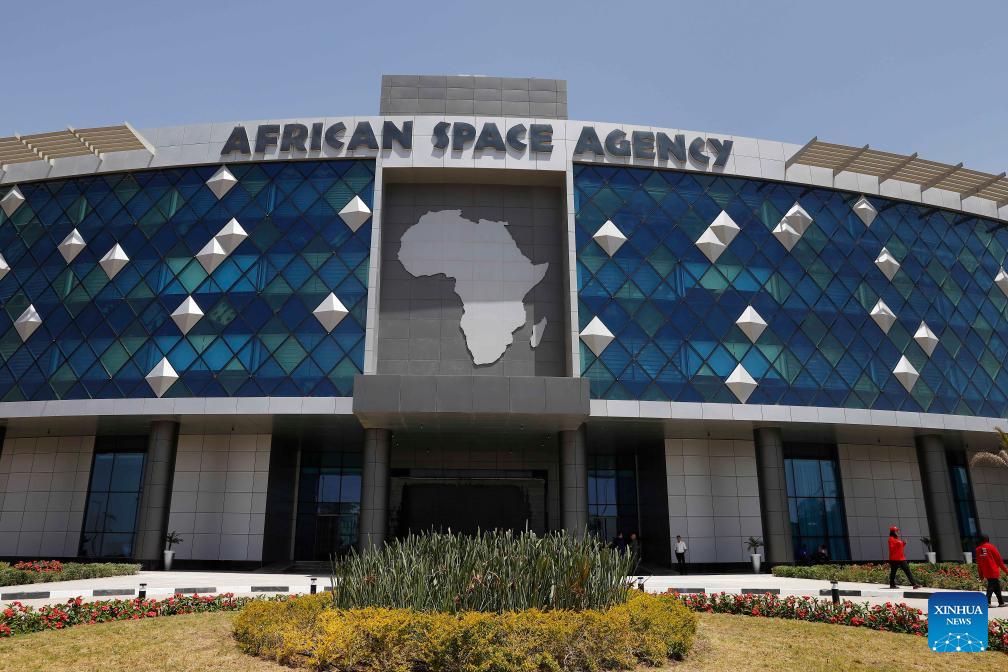
In 2025, the African Space Agency officially opened its headquarters in Cairo, Egypt. It marked a historic moment: Africa was no longer dreaming about space — it was organizing for it.
This was bigger than politics.
It was psychological.
For the first time, Africa began building a continental identity around advanced technology, engineering, satellites, aerospace systems, and eventually rocket launches.
The world often speaks about Africa as a place of poverty, crisis, and dependency. But the reality is more complicated.
Africa is young.
Africa is rapidly digitizing.
Africa has some of the fastest-growing cities on Earth.
Africa has enormous mineral wealth essential for modern technology.
And now, Africa is beginning to enter the space economy.
The global space economy is expected to become one of the largest industries of the 21st century, powering everything from GPS and internet access to climate monitoring, banking systems, military defense, agriculture, AI infrastructure, and global communications.
Space is no longer science fiction.
Space is infrastructure.
And whoever controls access to space controls part of the future of humanity.
Why Rocket Launches Matter More Than People Think
Most people hear “rocket launch” and imagine astronauts.
But rockets are not just about astronauts.
They are about power.
Every modern nation depends on satellites:
- Internet systems
- Military intelligence
- Banking synchronization
- Weather forecasting
- Agriculture monitoring
- Climate tracking
- Navigation systems
- Disaster response
- AI data networks
Without satellites, modern civilization slows down.
That means countries that cannot launch their own systems remain dependent on foreign powers.
Africa understands this now.
Today, only a small number of African countries operate satellites, with nations like Egypt, South Africa, Nigeria, Algeria, and Morocco leading the way.
But Africa’s long-term goal is bigger than satellites.
It is sovereignty.
So Why Did Africa Fall Behind?
The reasons are painful.
Colonialism extracted resources instead of building advanced industries.
After independence, many African nations faced:
- political instability,
- debt crises,
- corruption,
- civil wars,
- weak industrialization,
- brain drain,
- foreign interference,
- underfunded education systems.
While the United States and Soviet Union were competing in the Space Race, many African countries were fighting simply to stabilize their governments.
Then came another challenge:
Talent left.
Some of Africa’s brightest engineers, scientists, and innovators moved abroad because opportunities at home were limited.
Africa did not lack intelligence.
It lacked systems.
And space programs require systems:
- universities,
- manufacturing,
- stable electricity,
- advanced research labs,
- long-term investment,
- political continuity.
These things take decades to build.
The World Is Quietly Racing for Africa
Here is the part many people do not see:
The global powers already know Africa matters.
China has rapidly expanded its space partnerships across Africa, building satellite cooperation projects, technology transfers, and infrastructure agreements.
Europe is strengthening ties with the African space sector.
Private companies see Africa as a future market for:
- launch facilities,
- satellite internet,
- drone systems,
- AI infrastructure,
- defense technology,
- renewable energy,
- communication networks.
Because the truth is simple:
The next century cannot be built without Africa.
The continent holds:
- strategic geography,
- critical minerals,
- a massive young population,
- untapped markets,
- enormous solar potential,
- equatorial launch advantages.
And the world knows it.
The Equator Advantage
One of the greatest hidden advantages Africa has is geography.
Launching rockets near the equator gives spacecraft extra velocity from Earth’s rotation. This reduces fuel requirements and lowers costs.
That is why countries near the equator could become extremely valuable launch hubs in the future.
Imagine:
- Kenyan launch sites,
- Nigerian spaceports,
- East African aerospace corridors,
- African-built reusable rockets,
- universities training thousands of aerospace engineers,
- African companies launching satellites for the world.
Today it sounds ambitious.
But so did reusable rockets twenty years ago.
Africa’s Greatest Resource Is Not Oil
It is youth.
Africa has the youngest population on Earth.
Millions of young Africans are already teaching themselves:
- coding,
- robotics,
- AI,
- engineering,
- electronics,
- aerospace design.
The internet changed everything.
A student in Nicosia, Lagos, Nairobi, Kigali, Cairo, Johannesburg, or Accra can now study rocket propulsion from the same online resources used by students in Silicon Valley.
Knowledge is becoming decentralized.
That changes history.
Because the future space race may not belong only to governments anymore.
It may belong to young builders.
What Happens If Africa Succeeds?
If Africa becomes a true launch and aerospace power, the impact on the world will be massive.
Not symbolic.
Massive.
Economically
Africa could become a major player in the trillion-dollar global space economy.
Technologically
Advanced industries would accelerate:
- AI,
- robotics,
- semiconductor development,
- satellite manufacturing,
- renewable energy systems.
Educationally
Science and engineering culture would transform millions of lives.
Politically
Africa would gain more strategic independence from foreign powers.
Globally
The world would become less technologically centralized.
Because right now, too much of humanity’s technological power is concentrated in only a few regions.
A rising Africa changes the balance.
The Future Is Already Beginning
The story of Africa and space is not really about rockets.
It is about belief.
For too long, Africa was described as a continent waiting for aid, waiting for rescue, waiting for permission.
But space changes psychology.
When a continent builds satellites, launch systems, AI labs, aerospace companies, and scientific institutions, it begins to see itself differently.
And when people change how they see themselves, history changes.
The future may look back at this decade as the moment Africa stopped watching the future and started building it.
And when the first truly African-built rocket rises into the sky from African soil, it will not only carry satellites.
It will carry something much heavier:
The ambitions of an entire continent.