AI Drone Detection: How YOLOv8 Is Transforming Modern Defense
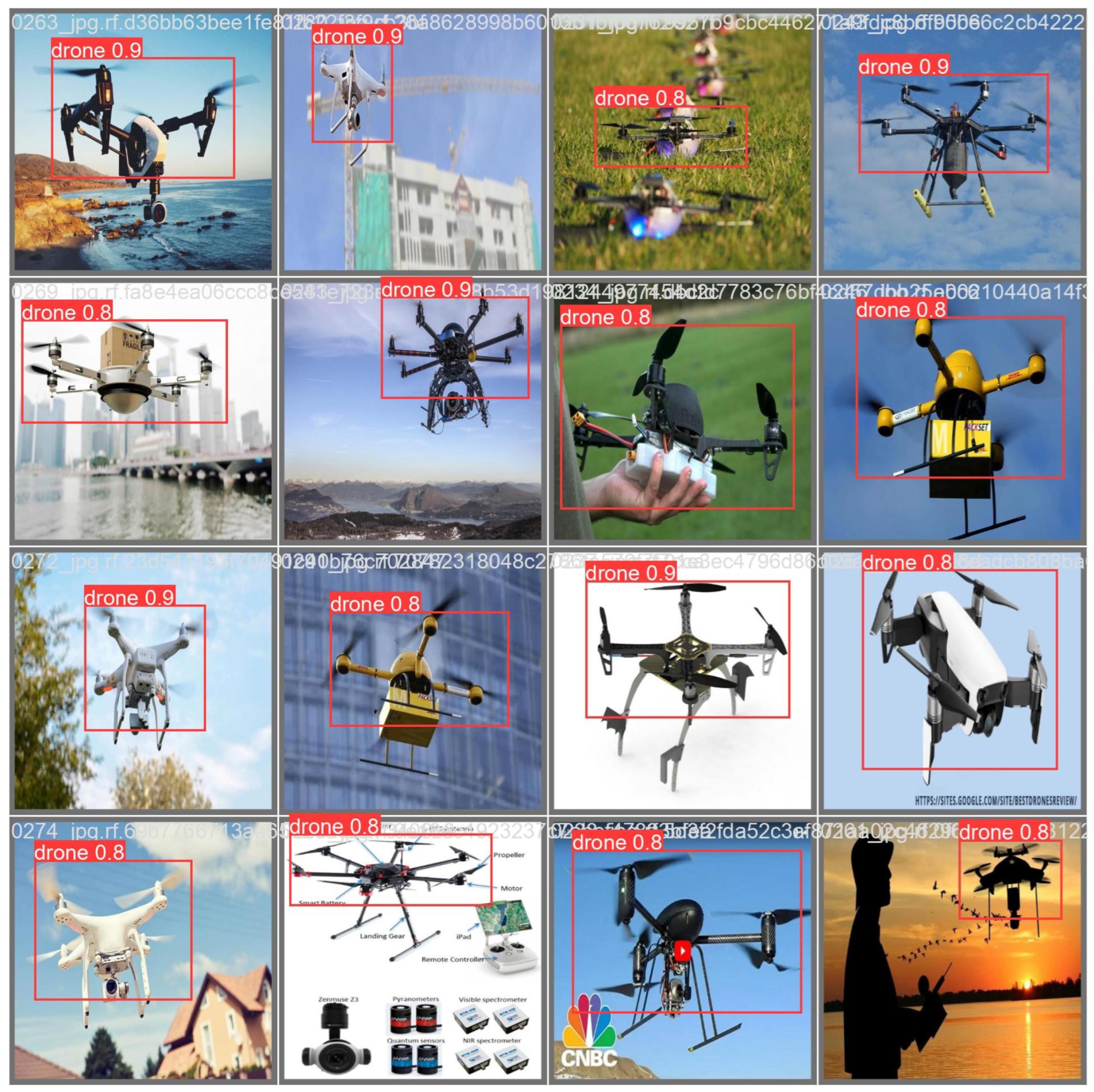
AI Drone Detection: How YOLOv8 Is Transforming Modern Defense
Introduction
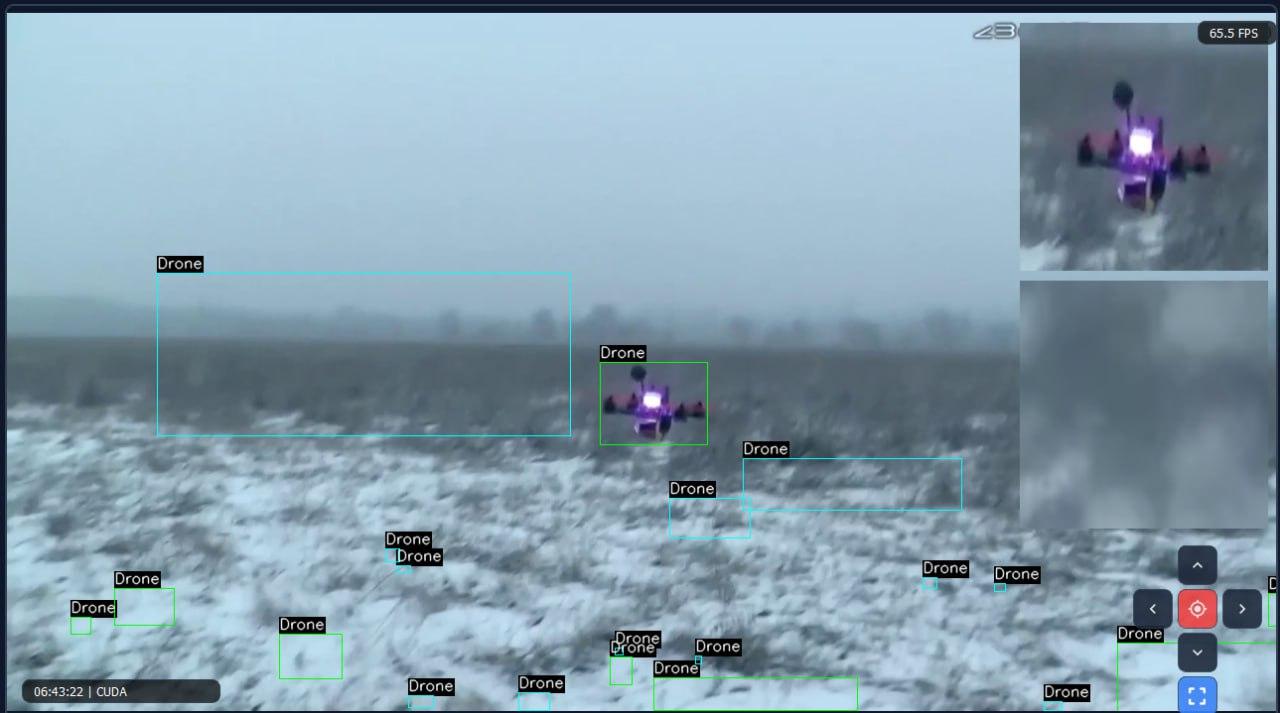
For over a century, military superiority has largely been defined by larger fleets, faster aircraft, more sophisticated radar systems, and increasingly powerful missiles. Nations invested billions of dollars into technologies capable of detecting enemy aircraft hundreds of kilometers away. Radar became one of the most important inventions in modern warfare, fundamentally reshaping how countries protected their borders and critical infrastructure.
Today, however, the nature of aerial threats is changing dramatically.
Instead of expensive fighter jets flying at high altitudes, security agencies now face a growing number of small, agile, and inexpensive drones. Many of these aircraft cost only a few hundred dollars yet are capable of carrying cameras, sensors, communication equipment, or even dangerous payloads. Their low cost and widespread availability have transformed drones from consumer gadgets into tools with significant implications for national security, public safety, and industrial protection.
Unlike traditional aircraft, drones are intentionally designed to be compact and lightweight. Their small physical size produces a minimal radar signature, making them difficult for conventional radar systems to detect consistently. Many operate at low altitudes, blending into surrounding terrain or urban environments. Electric motors generate relatively little acoustic noise, and their ability to change direction rapidly makes tracking even more difficult.
These characteristics expose a growing weakness in conventional surveillance systems.
The challenge is no longer simply detecting something flying through the sky. The challenge is determining what it is, whether it poses a threat, and how quickly a response should be initiated.
This is where Artificial Intelligence is beginning to redefine modern defense.
Rather than relying exclusively on radar or acoustic sensors, researchers are increasingly turning toward computer vision—a branch of artificial intelligence that enables computers to interpret and understand images and video in much the same way humans do.
Instead of asking a radar system:
"Did something enter the airspace?"
AI-powered surveillance systems ask far more sophisticated questions:
- Is that object a drone or a bird?
- Is it approaching protected infrastructure?
- How fast is it moving?
- Is it behaving normally?
- Does it represent a security threat?
Answering these questions in real time requires extraordinary computational capability. Fortunately, advances in deep learning have made this possible.
One of the most influential technologies driving this transformation is YOLOv8 (You Only Look Once Version 8), an advanced object detection model capable of identifying multiple objects in high-definition video streams at remarkable speed. Recent research has demonstrated that YOLOv8-based systems can detect drones, helicopters, birds, and aircraft with exceptionally high accuracy while processing video at approximately 50 frames per second, making true real-time surveillance practical.
The implications extend far beyond military operations.
Modern AI drone detection systems are beginning to influence:
- Airport security
- Border protection
- Critical infrastructure monitoring
- Wildlife conservation
- Disaster response
- Smart city surveillance
- Industrial inspection
- Autonomous robotics
As cameras become cheaper and computing hardware becomes more powerful, every surveillance camera has the potential to become an intelligent sensor capable of understanding its environment rather than simply recording it.
This represents one of the most significant technological shifts in modern security.
At SouthOrbit Technology, we believe this transformation is only beginning.
Artificial intelligence will become the operating system behind tomorrow's defense technologies, enabling autonomous surveillance systems that are faster, smarter, and more adaptive than traditional approaches. By combining advances in computer vision, machine learning, and edge computing, the next generation of defense platforms will not merely observe the world—they will interpret it, learn from it, and assist human operators in making faster, better-informed decisions.
Understanding how these systems work is essential for anyone interested in the future of defense technology.
To appreciate why AI-powered surveillance is advancing so rapidly, we must first understand the rapidly evolving drone landscape—and why conventional detection technologies are struggling to keep pace.
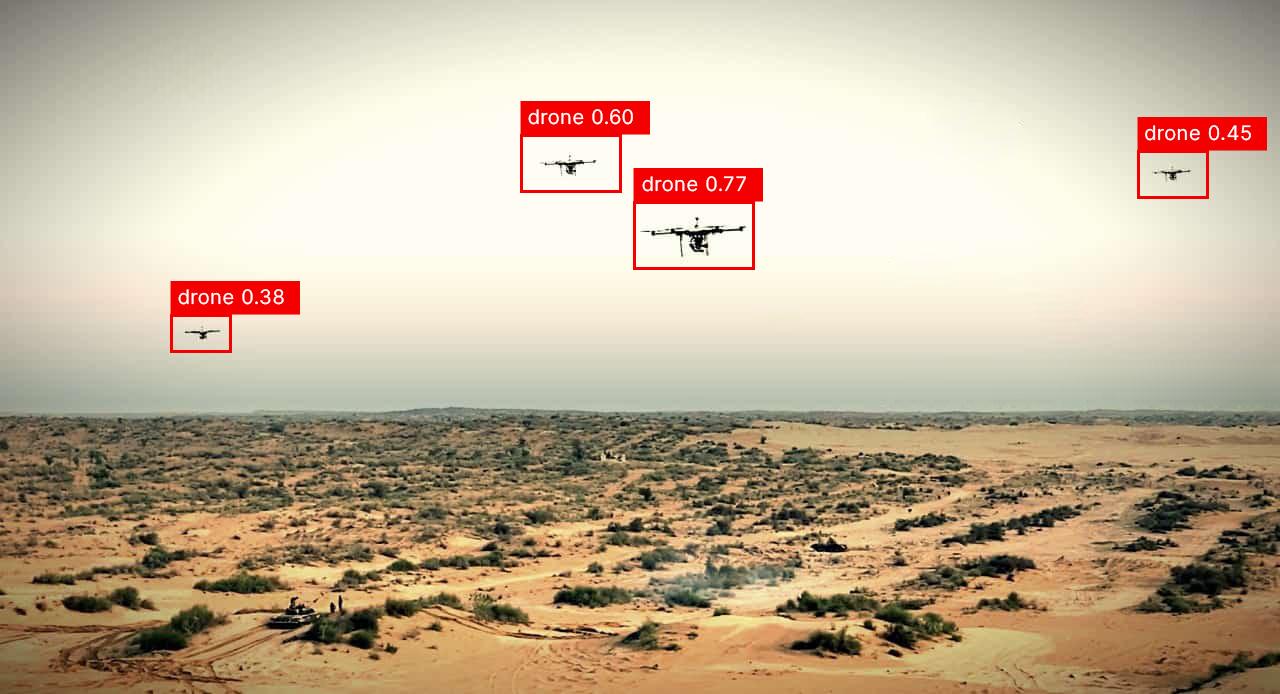
The Global Drone Threat: Why AI Drone Detection Has Become a National Security Priority
The Rise of Small Drones
Twenty years ago, aerial surveillance was dominated by governments and militaries with billion-dollar defense budgets. Advanced reconnaissance aircraft, satellites, and sophisticated radar installations defined the capabilities of national security agencies. Today, however, the landscape has shifted dramatically.
A drone that once required military-grade engineering can now be purchased online, assembled in minutes, and flown by almost anyone with a smartphone.
The commercial drone industry has experienced explosive growth over the last decade. Advances in battery technology, GPS navigation, lightweight materials, and onboard cameras have made unmanned aerial vehicles (UAVs) more capable and affordable than ever before.
For photographers, farmers, engineers, and emergency responders, this is excellent news. Drones are improving productivity across countless industries.
Yet every technological breakthrough brings new security challenges.
The same drone used to inspect power lines can also be used to conduct unauthorized surveillance. The same autonomous navigation technology that helps farmers monitor crops can allow malicious actors to approach restricted facilities with remarkable precision.
The democratization of drone technology means governments and organizations must now prepare for threats that were virtually nonexistent just a decade ago.
Why Drones Are Difficult to Detect
Conventional aircraft are relatively easy to identify.
Commercial airplanes fly along predictable routes, transmit identification signals, and generate radar signatures large enough for air traffic control systems to monitor continuously.
Drones behave very differently.
Many consumer and commercial UAVs:
- Fly below traditional radar coverage
- Operate at unpredictable altitudes
- Change direction rapidly
- Produce very small radar cross-sections
- Generate relatively little acoustic noise
- Can hover in place for extended periods
From a surveillance perspective, these characteristics create an extremely challenging target.
Even experienced human operators monitoring security cameras may struggle to distinguish a small quadcopter from a bird when the object occupies only a tiny fraction of the image.
This challenge becomes even greater under difficult environmental conditions, including:
- Cloudy skies
- Fog
- Heavy rain
- Urban skylines
- Dense forests
- Mountainous terrain
- Low-light environments
Modern surveillance systems must therefore detect objects that are not only small but also partially hidden, moving quickly, and visually similar to countless background features.
The Real-World Security Challenge
Around the world, unauthorized drones have become increasingly common near sensitive locations.
Examples include:
- International airports
- Military installations
- Government buildings
- Energy infrastructure
- Border crossings
- Correctional facilities
- Large public events
Even a single unidentified drone can disrupt operations.
Airport authorities may suspend flights.
Military bases may activate emergency procedures.
Critical infrastructure operators may temporarily halt operations until the threat is understood.
In many situations, the greatest challenge is uncertainty.
Security personnel often cannot immediately determine whether a drone is:
- A hobbyist aircraft
- A commercial inspection drone
- A law enforcement asset
- A wildlife monitoring platform
- Or a genuine security threat
The ability to identify the object within seconds can significantly improve decision-making.
Why Artificial Intelligence Changes Everything
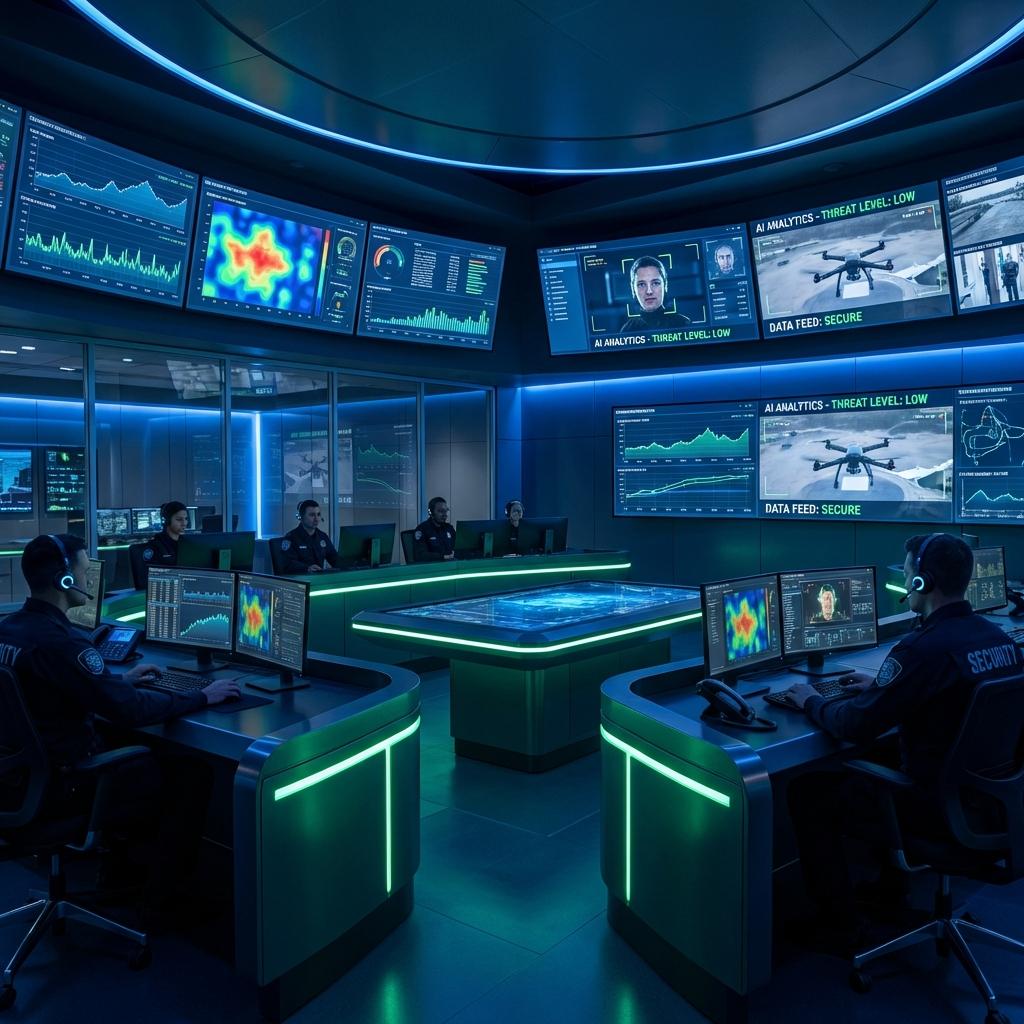
Historically, surveillance relied heavily on human observation.
Operators watched dozens—or even hundreds—of camera feeds simultaneously.
As camera networks expanded, this approach became increasingly impractical.
Humans become fatigued.
Machines do not.
Artificial intelligence fundamentally changes the surveillance process by analyzing every frame of video continuously.
Instead of waiting for an operator to notice something unusual, AI systems can automatically:
- Detect flying objects
- Track their movement
- Estimate speed
- Classify object types
- Monitor flight behavior
- Generate alerts
- Record evidence
- Prioritize potential threats
Rather than replacing security personnel, AI acts as a force multiplier, allowing a single operator to monitor far larger areas with greater consistency.
Computer Vision Is Becoming the Eyes of Modern Defense
Computer vision is one of the fastest-growing areas of artificial intelligence.
Using deep neural networks, modern computer vision systems learn to recognize visual patterns by training on thousands—or even millions—of labeled images.
Instead of manually defining what a drone should look like, researchers allow neural networks to learn distinguishing features automatically.
This enables systems to recognize:
- Fixed-wing aircraft
- Quadcopters
- Helicopters
- Birds
- Balloons
- Aircraft at extreme distances
- Objects partially hidden by terrain
Recent research has demonstrated that training on a broad range of flying objects before fine-tuning for specific drone detection tasks helps AI models develop stronger visual representations, leading to better performance in challenging real-world environments.
This strategy allows AI to distinguish subtle differences between visually similar objects instead of relying on simple shape matching.
The New Defense Technology Race
Artificial intelligence is rapidly becoming as important to defense as radar was in the twentieth century.
Nations investing in AI-powered surveillance are not simply purchasing software—they are building systems capable of understanding complex environments in real time.
Future defense platforms will increasingly combine:
- Computer vision
- Thermal imaging
- Radar
- Acoustic sensors
- GPS intelligence
- Edge AI processors
- Autonomous decision-support systems
Together, these technologies create layered surveillance systems that are significantly more resilient than any individual sensor operating alone.
This convergence is shaping the next generation of AI drone detection, where cameras become intelligent observers rather than passive recording devices.
At SouthOrbit Technology, we see this as more than an evolution in surveillance. It is the foundation for a new generation of defense technologies—systems that can perceive, interpret, and respond to events with a level of speed and consistency that traditional approaches cannot match.
How Computer Vision Works: Inside the AI That Detects Drones in Real Time
Teaching Machines to See
When humans look into the sky, identifying a drone feels almost effortless.
Within a fraction of a second, our brains analyze the object's shape, movement, size, and context. Even when the object is distant, we subconsciously compare it with thousands of visual memories accumulated over a lifetime.
Computers, however, do not naturally possess this ability.
A digital camera captures nothing more than millions of pixels arranged in a grid. To a computer, an image is simply a collection of numerical values representing brightness and color. There is no inherent understanding of "drone," "bird," or "airplane."
Computer vision bridges this gap.
Using deep learning, engineers train neural networks to recognize meaningful patterns hidden within images. Rather than following hand-written rules, these models learn directly from data, discovering the visual characteristics that distinguish one object from another.
This capability has become the foundation of modern AI drone detection systems.
From Pixels to Intelligence
Every frame captured by a surveillance camera passes through several stages before a decision is made.
- Image Acquisition – The camera captures a frame.
- Preprocessing – The image is resized, normalized, and prepared for analysis.
- Feature Extraction – The neural network identifies meaningful visual patterns.
- Object Detection – The AI predicts where objects are located.
- Classification – Each detected object is assigned a category, such as drone, bird, helicopter, or airplane.
- Confidence Scoring – The model estimates how certain it is about each prediction.
- Tracking – Objects are followed across consecutive video frames.
This entire pipeline often completes in less than 20 milliseconds on modern hardware, making true real-time surveillance possible.
Why Deep Learning Outperforms Traditional Computer Vision
Earlier computer vision systems relied on manually engineered features.
Developers would explicitly instruct algorithms to search for:
- Straight lines
- Circular propellers
- Specific edge patterns
- Fixed object dimensions
While effective under controlled conditions, these methods struggled in the real world.
A drone viewed from above looks completely different from one viewed from the side. Lighting, weather, shadows, motion blur, and background clutter further complicate detection.
Deep learning solves this limitation by allowing neural networks to learn features automatically.
Instead of programmers defining every possible drone appearance, the model studies thousands of labeled images and gradually develops increasingly sophisticated representations.
Early layers detect simple edges and textures.
Intermediate layers recognize wings, propellers, and body shapes.
Deeper layers combine these features into complete object representations capable of distinguishing subtle differences between drones and visually similar objects.
The Importance of Feature Extraction
One of the most remarkable findings highlighted in recent research involves feature extraction.
Rather than training exclusively on drones, researchers first trained their model using 40 different categories of flying objects, encouraging the neural network to learn broad visual characteristics shared across aerial targets. These learned representations were then refined through transfer learning on a more challenging dataset containing smaller, more distant, and partially occluded flying objects.
This approach significantly improved the model's ability to generalize to real-world environments.
Instead of memorizing what a drone looks like, the AI learned to understand what makes something a flying object.
That distinction is critical.
Real surveillance systems rarely encounter ideal conditions. They must identify unfamiliar drones, different camera angles, varying weather, and complex backgrounds without sacrificing accuracy.
Seeing Beyond Human Vision
Another advantage of modern computer vision is consistency.
Human operators become tired after monitoring surveillance feeds for extended periods.
AI systems do not.
A neural network evaluates every frame using the same mathematical criteria regardless of time of day or workload.
It can monitor multiple cameras simultaneously, track dozens of moving objects, and immediately alert security personnel whenever suspicious activity occurs.
Rather than replacing human judgment, AI enhances it by filtering enormous amounts of visual information into actionable intelligence.
Why Real-Time Processing Matters
Detection alone is not enough.
Imagine an unauthorized drone approaching an airport runway.
If the system identifies it five minutes later, the opportunity to respond may already be lost.
Modern defense platforms therefore prioritize low latency as much as high accuracy.
The research demonstrated that an optimized YOLOv8 model achieved approximately 50 frames per second on 1080p video while maintaining excellent detection performance, making it suitable for continuous monitoring applications.
Real-time processing enables:
- Immediate threat alerts
- Continuous object tracking
- Faster operator response
- Improved situational awareness
- More effective coordination with other surveillance systems
As hardware continues to improve, these capabilities will increasingly be deployed at the network edge—directly on cameras and embedded devices—reducing response times even further.
From Vision to Decision
Computer vision is only the first layer of intelligent defense.
Future surveillance platforms will integrate visual detection with radar, thermal imaging, acoustic sensors, and predictive analytics to create systems capable not only of detecting drones but also of understanding intent and supporting rapid decision-making.
At SouthOrbit Technology, this convergence represents the future of intelligent security: AI systems that perceive their environment, interpret complex situations, and assist human operators with accurate, real-time information.
Why YOLOv8 Is Revolutionizing AI Drone Detection
Artificial intelligence has transformed dramatically over the last decade, but few breakthroughs have had as much impact on computer vision as the YOLO (You Only Look Once) family of object detection models.
Today, YOLO powers everything from autonomous vehicles and industrial robotics to smart cities and advanced surveillance systems. Among its latest versions, YOLOv8 has emerged as one of the most capable frameworks for AI drone detection, combining exceptional accuracy with the speed required for real-time defense applications.
Unlike traditional computer vision systems that separate object recognition into multiple stages, YOLOv8 performs the entire task in a single forward pass through the neural network. This design dramatically reduces latency while maintaining high detection accuracy, making it particularly well suited for environments where decisions must be made within milliseconds.
The Evolution of Object Detection
Before deep learning became mainstream, object detection relied heavily on manually engineered algorithms.
Developers designed software to search for predefined characteristics such as:
- Straight edges
- Circular shapes
- Color differences
- Motion vectors
- Geometric patterns
Although effective under controlled conditions, these approaches struggled whenever lighting changed, weather deteriorated, or objects appeared from unfamiliar viewpoints.
Deep learning fundamentally changed this process.
Instead of programmers defining every rule, neural networks learned directly from enormous image datasets, discovering visual features automatically.
The YOLO family became one of the first object detection systems capable of performing this analysis in real time.
Each new generation improved both speed and accuracy.
- YOLOv1 introduced real-time object detection.
- YOLOv3 significantly improved localization accuracy.
- YOLOv5 optimized speed and deployment across different hardware.
- YOLOv8 introduced architectural improvements that further enhanced detection performance while simplifying deployment.
This steady evolution has made YOLO one of the most widely adopted computer vision frameworks in both research and industry.
Why "You Only Look Once" Matters
Traditional object detectors often analyze the same image multiple times.
One algorithm proposes potential object locations.
Another classifies those objects.
A third refines the bounding boxes.
Each additional stage increases computational cost and slows inference.
YOLO approaches the problem differently.
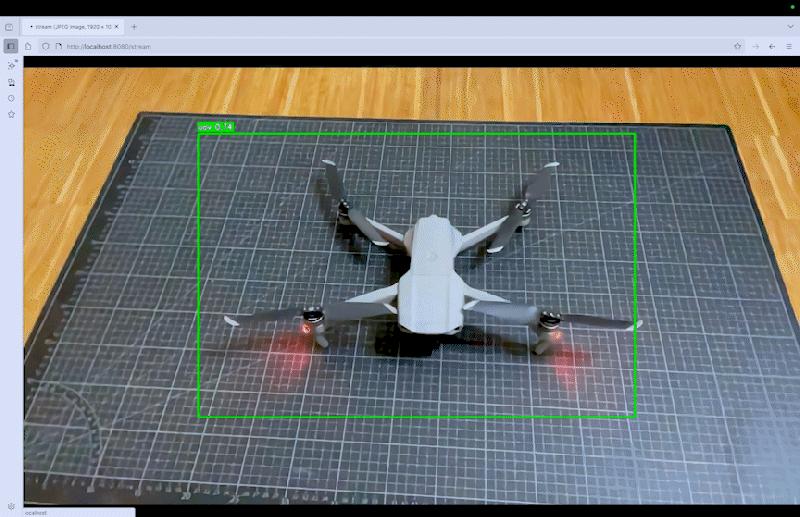
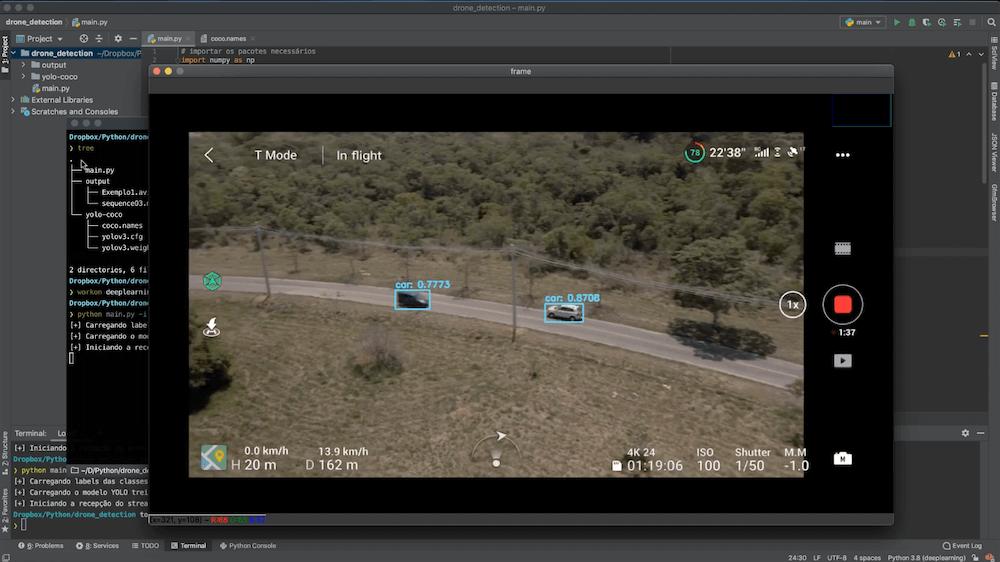
It processes the entire image only once, simultaneously predicting:
- Object locations
- Bounding boxes
- Object categories
- Confidence scores
This single-stage architecture dramatically reduces computation while enabling real-time performance.
For surveillance systems monitoring dozens of video streams simultaneously, every millisecond saved translates into faster threat detection and improved situational awareness.
Understanding the YOLOv8 Architecture
YOLOv8 follows the now-established three-stage architecture used in modern object detection:
1. Backbone
The backbone extracts visual features from the input image.
Rather than looking for complete objects immediately, it gradually learns increasingly complex representations.
Early layers identify:
- Edges
- Corners
- Color transitions
- Basic textures
Intermediate layers recognize:
- Wings
- Rotor blades
- Aircraft bodies
- Shadows
- Object contours
Deeper layers combine these features into complete semantic representations that allow the network to distinguish between drones, birds, helicopters, and airplanes.
The research paper highlights YOLOv8's CSPDarknet53 backbone with updated C2f modules, which improve feature extraction efficiency and gradient flow compared with earlier designs.
2. Neck
Once features have been extracted, they pass into the network's neck.
The neck combines information from different image scales.
This is especially important because surveillance cameras encounter objects of vastly different sizes.
A nearby helicopter may occupy half of the frame.
A distant drone may occupy less than 0.02%.
By merging information from multiple resolutions, YOLOv8 becomes significantly better at detecting both large and extremely small objects simultaneously.
3. Detection Head
The final stage predicts:
- Object class
- Bounding box coordinates
- Detection confidence
Unlike previous YOLO versions that relied heavily on predefined anchor boxes, YOLOv8 adopts an anchor-free detection mechanism. Instead of adjusting predefined box shapes, the network predicts object centers directly, reducing computational complexity and improving localization.
For drone detection, where targets are often tiny and fast-moving, this improvement is particularly valuable.
Why YOLOv8 Excels at Drone Detection
Drone detection is one of the most demanding object detection tasks.
Unlike pedestrians or vehicles, drones often:
- Occupy only a few pixels.
- Blend into complex backgrounds.
- Move rapidly.
- Rotate unpredictably.
- Appear under varying lighting conditions.
The researchers addressed this challenge by first training a generalized model on 40 categories of flying objects, encouraging the network to learn broad aerial features before fine-tuning it for real-world drone detection through transfer learning. This strategy enabled excellent performance even when drones were partially occluded or extremely small.
This demonstrates an important principle in modern AI:
The quality of learned representations often matters more than simply increasing model size.
Accuracy Meets Speed
Many AI systems achieve excellent accuracy in laboratory environments but are too slow for operational deployment.
YOLOv8 addresses this trade-off by balancing computational efficiency with strong detection performance.
In the research, the optimized model processed 1080p video at approximately 50 frames per second, while the refined transfer-learned model achieved 99.1% mAP@50 on its evaluation dataset.
For defense applications, these metrics are significant.
A system capable of identifying aerial threats in real time gives operators precious additional seconds to assess the situation and coordinate an appropriate response.
Beyond Drones
Although this article focuses on AI drone detection, the same underlying technology powers a wide range of intelligent systems.
YOLOv8 is already being applied to:
- Autonomous vehicles
- Industrial quality inspection
- Medical imaging
- Wildlife monitoring
- Maritime surveillance
- Precision agriculture
- Search and rescue
- Smart manufacturing
- Retail analytics
- Robotics
This versatility is one reason computer vision has become one of the fastest-growing areas of artificial intelligence.
The same neural network architecture that detects drones can also monitor wildlife, inspect infrastructure, or guide autonomous robots with only changes to the training data.
SouthOrbit's Perspective
At SouthOrbit Technology, we believe frameworks like YOLOv8 represent only the beginning of intelligent visual perception.
The future lies in systems that combine computer vision with radar, thermal sensors, acoustic analysis, satellite data, and edge AI computing to create multi-layered surveillance platforms capable of understanding complex environments in real time.
These systems will not simply detect objects.
They will recognize behavior, predict intent, assess risk, and support faster, more informed decision-making for security teams, critical infrastructure operators, and defense organizations.
As AI continues to mature, the distinction between "camera" and "intelligent sensor" will disappear.
That future is arriving faster than many realize.
How Researchers Achieved Near State-of-the-Art AI Drone Detection
Artificial intelligence is often judged by its final performance metrics—accuracy, speed, or precision. However, these impressive numbers are only the visible outcome of a much deeper process. Behind every high-performing AI system lies months of data preparation, model optimization, experimentation, and continuous refinement.
In the field of AI drone detection, success depends on far more than simply selecting a powerful neural network. The quality of the training data, the learning strategy, and the evaluation methodology all determine whether a model succeeds in real-world environments or fails when conditions become challenging.
The research behind the YOLOv8-based detection system demonstrates this principle exceptionally well. Rather than focusing solely on architecture, the researchers carefully designed a training pipeline that emphasized generalization—the ability to recognize flying objects under conditions never encountered during training.
This philosophy is one of the reasons their refined model achieved 99.1% mAP@50 while maintaining real-time performance.
Why Data Matters More Than Algorithms
One of the biggest misconceptions about artificial intelligence is that choosing the latest model automatically guarantees the best results.
In reality, even the world's most advanced neural network performs poorly if it is trained on poor-quality data.
Imagine teaching a child to recognize birds using only ten photographs.
Now imagine teaching the same child using hundreds of thousands of images taken:
- During sunrise
- At sunset
- In rain
- During snowfall
- From different angles
- At different distances
- Against forests
- Above cities
- In deserts
The second child develops a much deeper understanding.
Artificial intelligence learns in much the same way.
The greater the diversity of the training data, the better the model becomes at recognizing unfamiliar situations.
Learning the Language of Flight
Instead of immediately teaching the model to detect drones alone, the researchers took a more sophisticated approach.
Their first training stage exposed the neural network to 40 different categories of flying objects, including birds, helicopters, airplanes, and drones. This forced the model to learn broad visual characteristics shared among aerial objects rather than memorizing one specific shape.
This is similar to teaching someone the concept of "vehicles" before asking them to distinguish between a sports car and a pickup truck.
The model first learned:
- Flight dynamics
- Wing structures
- Rotor configurations
- Aircraft silhouettes
- Relative proportions
- Motion-related visual cues
Only after building this general understanding did researchers specialize the system for drone detection.
Transfer Learning: Standing on Existing Knowledge
Training a deep neural network entirely from scratch can require millions of labeled images and enormous computing resources.
Instead, modern AI often uses transfer learning.
Transfer learning allows a model to reuse knowledge gained from one task and apply it to another.
Think about learning languages.
Once someone understands Spanish, learning Italian becomes easier because many grammatical structures and vocabulary overlap.
Neural networks work similarly.
The researchers first trained a generalized model capable of recognizing numerous aerial objects.
They then transferred those learned weights into a second model trained specifically for more realistic surveillance scenarios involving:
- Smaller drones
- Greater distances
- Partial occlusion
- Complex backgrounds
- Real-world environments
This two-stage strategy significantly improved the model's performance while reducing training time.
Transfer learning has become one of the most powerful techniques in modern deep learning because it allows AI systems to leverage prior knowledge instead of starting from zero.
Training Never Happens in One Attempt
Many people imagine AI training as pressing a button and waiting for results.
The reality is far more experimental.
Researchers continually adjust:
- Learning rate
- Batch size
- Optimizer
- Weight decay
- Number of training epochs
- Loss functions
- Data augmentation strategies
Each adjustment influences how effectively the neural network learns.
In this research, the team evaluated multiple YOLOv8 model sizes before selecting the medium variant because it offered the best balance between accuracy and processing speed. They then performed a hyperparameter search to identify settings that improved validation performance before completing full training.
This illustrates an important engineering principle:
The fastest model is not always the best.
The most accurate model is not always practical.
The best AI systems balance both.
Understanding mAP: Measuring AI Performance
When researchers claim an object detection system is "99% accurate," what exactly does that mean?
Unlike simple image classification, object detection requires answering several questions simultaneously:
- Did the AI find the object?
- Was it correctly classified?
- Was the bounding box placed accurately?
- Did it miss other objects?
- Did it generate false alarms?
To evaluate these factors, researchers commonly use Mean Average Precision (mAP).
Rather than measuring only correct predictions, mAP evaluates how accurately objects are localized and classified across multiple confidence thresholds.
The paper explains mAP as the average precision computed over different Intersection over Union (IoU) thresholds, providing a comprehensive measure of detection quality rather than a single success rate.
For surveillance applications, this is critical.
A detection is only useful if the system both identifies the correct object and accurately determines its location.
The Challenge of Tiny Objects
One of the most remarkable aspects of the research was its ability to detect objects occupying only a tiny fraction of an image.
Some drones represented as little as 0.02% of the total image area were still successfully identified under challenging conditions.
To appreciate this achievement, imagine trying to identify a coin from several football fields away.
That is the level of precision modern computer vision systems are approaching.
Tiny object detection remains one of the most difficult challenges in artificial intelligence because small objects contain very little visual information.
Every pixel becomes valuable.
Every feature matters.
Why Generalization Matters
Laboratory demonstrations often look impressive.
Real-world deployments are much harder.
A surveillance model trained only under sunny conditions may fail during heavy rain.
A model trained using one drone design may struggle with newer aircraft.
The researchers therefore emphasized generalization—the ability to perform well under unfamiliar conditions.
By exposing the neural network to diverse aerial objects and later refining it using realistic surveillance imagery, they created a model capable of adapting to environments far beyond the original training data.
This capability is essential for modern defense systems, where operators cannot predict every possible scenario in advance.
Lessons for the Future of Defense AI
The biggest lesson from this research is that successful AI is not built through architecture alone.
It is built through:
- High-quality datasets
- Intelligent training strategies
- Transfer learning
- Careful optimization
- Rigorous evaluation
- Continuous refinement
As defense technologies continue to evolve, organizations developing AI surveillance systems will increasingly compete not only on software but also on the quality of their data and their ability to train models that remain reliable in unpredictable environments.
At SouthOrbit Technology, we believe this principle will define the next generation of intelligent defense systems. The companies that invest in better data, stronger learning strategies, and adaptable AI models will shape the future of autonomous surveillance, critical infrastructure protection, and AI-powered security.
Real-World Applications of AI Drone Detection Beyond the Battlefield
When people hear the phrase AI drone detection, they often think of military operations or national defense. While these are undoubtedly important applications, the technology has far broader implications. Computer vision and artificial intelligence are rapidly becoming foundational tools across industries, helping organizations improve safety, automate operations, and respond to threats more effectively.
The same algorithms capable of identifying a drone approaching a military installation can also monitor wildlife populations, inspect industrial assets, and support emergency responders during natural disasters.
This versatility is one of the greatest strengths of modern computer vision.
Airport Security
Airports have become increasingly vulnerable to unauthorized drone activity. Even a small consumer drone entering restricted airspace can force the suspension of flight operations, leading to delays, financial losses, and potential safety risks.
AI-powered surveillance systems equipped with computer vision can continuously monitor airport perimeters, automatically detect aerial objects, distinguish drones from birds, and alert operators within seconds.
Rather than relying solely on radar or manual observation, airports can deploy layered surveillance systems that combine cameras, AI, and traditional sensors to improve situational awareness.
Border Protection
Modern borders often span thousands of kilometers across deserts, forests, mountains, and coastlines. Monitoring these vast areas using human personnel alone is both expensive and inefficient.
AI-powered drone detection enables border agencies to monitor remote regions continuously. Computer vision systems can detect low-flying drones used for unauthorized surveillance or smuggling while reducing false alarms caused by wildlife or environmental conditions.
Combined with autonomous towers and edge AI devices, these systems can provide persistent monitoring without requiring constant human supervision.
Critical Infrastructure Protection
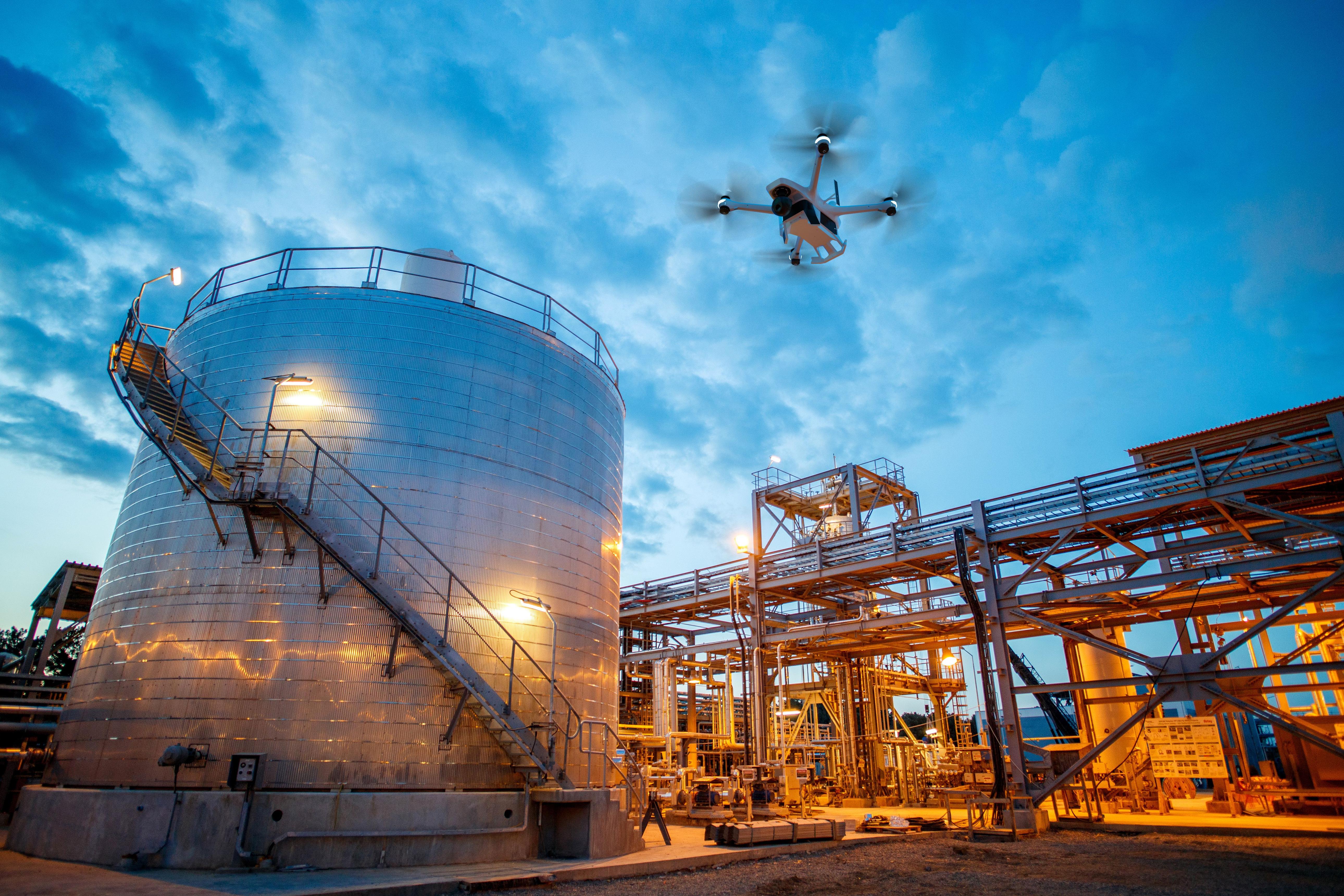
Power plants, oil refineries, water treatment facilities, telecommunications infrastructure, and transportation hubs are increasingly becoming targets for unauthorized drone activity.
Traditional CCTV systems record incidents.
Artificial intelligence understands them.
Modern surveillance platforms can automatically detect drones approaching sensitive infrastructure, track their movements, and notify security personnel before they reach restricted areas.
This shift from passive recording to intelligent monitoring represents one of the biggest advances in industrial security over the past decade.
Smart Cities
Cities are rapidly deploying thousands of cameras to improve traffic management, public safety, and infrastructure monitoring.
Adding artificial intelligence transforms these cameras into intelligent sensors.
Instead of simply storing video footage, AI systems can detect abnormal aerial activity, monitor large public gatherings, identify suspicious flight behavior, and support emergency response teams with real-time situational awareness.
As urban environments become increasingly connected, computer vision will play an essential role in building safer and more resilient cities.
Search and Rescue
Every minute matters during rescue operations.
Whether responding to earthquakes, floods, wildfires, or missing persons, emergency teams require accurate information as quickly as possible.
AI-powered computer vision enables drones to autonomously scan large search areas while detecting:
- People
- Vehicles
- Smoke
- Fire
- Damaged infrastructure
- Hazardous environments
Rather than forcing rescuers to manually inspect thousands of video frames, artificial intelligence can immediately highlight areas requiring attention.
Wildlife Conservation
Computer vision is also becoming an important tool for environmental protection.
Researchers are using AI-powered drones to:
- Count endangered species
- Monitor migration patterns
- Detect illegal poaching
- Identify habitat destruction
- Survey forests
These same detection algorithms originally developed for defense applications are now helping scientists better understand ecosystems while reducing operational costs.
The Future of Artificial Intelligence Surveillance
Artificial intelligence is moving beyond simple object detection.
Tomorrow's surveillance systems will not merely identify objects.
They will understand behavior.
Instead of asking:
"Is there a drone?"
Future AI systems will ask:
- Why is the drone here?
- Is its behavior normal?
- Where will it fly next?
- Does it represent a threat?
- What response is appropriate?
This shift represents the evolution from computer vision toward situational intelligence.
Multi-Sensor Intelligence
No single sensor provides complete awareness.
Future surveillance systems will combine:
- Computer vision
- Thermal cameras
- Radar
- Acoustic sensors
- GPS intelligence
- Satellite imagery
- Radio frequency detection
- Environmental sensors
Artificial intelligence will fuse these information sources into one coherent understanding of the environment.
This approach dramatically improves reliability while reducing false alarms.
Edge AI
Traditionally, surveillance video is transmitted to centralized servers for processing.
Edge AI changes this.
Instead, artificial intelligence runs directly on cameras or embedded devices.
Advantages include:
- Lower latency
- Reduced bandwidth
- Increased privacy
- Faster decision-making
- Improved reliability
For defense and critical infrastructure, edge AI enables real-time detection even in locations with limited network connectivity.
Autonomous Surveillance
Future surveillance systems will increasingly become autonomous.
Rather than requiring operators to manually monitor hundreds of video feeds, AI agents will continuously:
- Detect threats
- Track movement
- Prioritize incidents
- Generate reports
- Coordinate sensors
- Recommend responses
Human operators remain responsible for decision-making, while AI dramatically reduces workload.
SouthOrbit Technology's Vision
At SouthOrbit Technology, we believe artificial intelligence represents one of the defining technologies of the twenty-first century.
While much of today's AI development is concentrated in North America, Europe, and Asia, we believe Africa has an opportunity to become a creator—not just a consumer—of advanced intelligent systems.
Our vision extends beyond software.
We aim to build intelligent technologies that help governments, businesses, researchers, and industries solve real-world challenges using artificial intelligence.
Areas of research we are actively exploring include:
- Computer Vision
- Autonomous Surveillance
- AI Defense Systems
- Robotics
- Biomedical AI
- Scientific Research Platforms
- Intelligent Automation
- Edge AI Computing
Our long-term objective is to develop intelligent systems capable of understanding the physical world in real time.
Whether monitoring critical infrastructure, supporting emergency responders, or enabling next-generation security platforms, we believe AI should augment human decision-making—not replace it.
Research-Driven Innovation
SouthOrbit believes innovation begins with research.
The most impactful technologies are rarely created overnight.
They emerge through continuous experimentation, engineering, testing, and refinement.
That is why we actively study leading research in:
- Deep Learning
- Computer Vision
- Reinforcement Learning
- Robotics
- Biomedical Engineering
- Distributed Computing
- Large Language Models
Our mission is to transform research into practical technologies that improve security, productivity, and quality of life.
Frequently Asked Questions
What is AI drone detection?
AI drone detection uses artificial intelligence and computer vision to automatically identify drones within images or video streams, enabling real-time monitoring and surveillance.
Why is YOLOv8 popular?
YOLOv8 combines exceptional detection accuracy with real-time processing speed, making it one of the leading frameworks for computer vision applications including drone detection.
Can AI distinguish drones from birds?
Yes.
Modern computer vision models trained on diverse datasets can distinguish drones, birds, helicopters, airplanes, and other aerial objects with high accuracy under many conditions, though performance depends on the quality of training data and deployment environment.
Is AI replacing radar?
No.
Artificial intelligence complements radar rather than replacing it.
The strongest surveillance systems combine radar, cameras, thermal sensors, and AI to improve overall situational awareness.
What industries use computer vision?
Computer vision is used across:
- Healthcare
- Manufacturing
- Agriculture
- Defense
- Smart Cities
- Autonomous Vehicles
- Security
- Retail
- Logistics
- Robotics
Conclusion
Artificial intelligence is fundamentally changing how we observe and understand the world.
For decades, surveillance relied primarily on recording events after they occurred.
Today, computer vision enables systems to interpret those events as they happen.
Drone detection is only the beginning.
The same technologies driving modern defense will influence transportation, healthcare, scientific research, environmental conservation, manufacturing, and countless other industries.
As AI continues to evolve, the distinction between camera and intelligent sensor will disappear.
Every image will become data.
Every sensor will become intelligent.
Every decision will become faster and more informed.
At SouthOrbit Technology, we are committed to contributing to this future through research, engineering, and innovation.
We believe Africa has the talent, ambition, and opportunity to become a global leader in artificial intelligence—and we're building toward that vision, one breakthrough at a time.
References
The article draws on the uploaded research paper, "Real-Time Flying Object Detection with YOLOv8", alongside established concepts in computer vision and AI surveillance. Where discussing the paper's findings, the article accurately reflects its reported methodology and results, including transfer learning, YOLOv8 architecture, real-time inference performance, and evaluation metrics.
Interested in the future of AI, robotics, defense technology, and scientific innovation?
Follow SouthOrbit Technology for in-depth research articles, engineering insights, and updates on our mission to build intelligent technologies for Africa and the world.
Next Read:
- How Large Language Models Are Transforming Scientific Research
- The Future of Edge AI in Smart Cities
- Computer Vision Explained: From Pixels to Intelligence
- Why AI Will Redefine Modern Defense Systems