SouthOrbit Research: Exploring the Future of Supersonic Flight
By SouthOrbit Research & Engineering
August 2026
Can We Build a New Generation of Supersonic Vehicles?
For decades, engineers have pushed the boundaries of atmospheric flight. From the first aircraft to break the sound barrier to modern reusable launch vehicles, every generation has expanded our understanding of speed, propulsion, aerodynamics, and materials.
At SouthOrbit, we are interested in a simple question:
What would it take to design, simulate, and eventually test a new generation of high-speed vehicles?
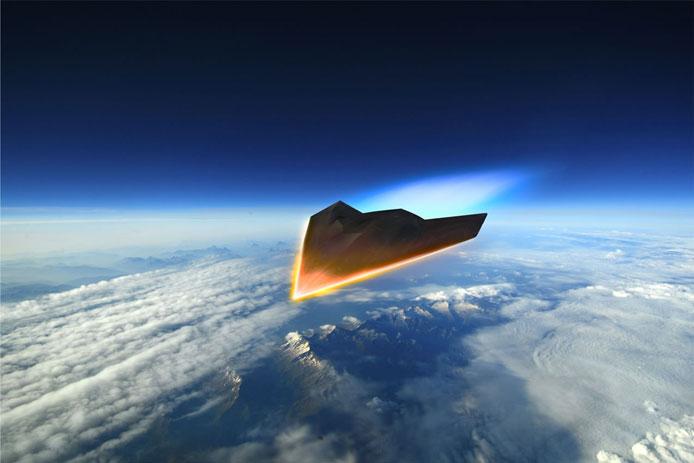
Our research begins with the study of supersonic flight vehicles capable of travelling faster than the speed of sound.
This is not simply a problem of making an aircraft engine more powerful. At supersonic speeds, the entire vehicle behaves differently.
1. What Happens When a Vehicle Goes Supersonic?
At sea level, the speed of sound is approximately 343 m/s, although the exact value changes with atmospheric conditions.
When a vehicle approaches Mach 1, airflow around the vehicle begins producing significant compressibility effects.
Once the vehicle exceeds Mach 1, it generates shock waves.
These shock waves can dramatically change:
- Pressure distribution
- Lift
- Drag
- Temperature
- Structural loading
- Engine performance
- Stability and control
This means that designing a supersonic vehicle requires the aerodynamic, propulsion, structural, thermal, and control systems to work together.
2. The Vehicle We Are Investigating
SouthOrbit's early research concept is a high-speed atmospheric research vehicle designed around a modular engineering architecture.
Rather than immediately attempting to build a full-scale aircraft, our approach is to develop the vehicle digitally first.
The conceptual system consists of:
Vehicle → Aerodynamics → Propulsion → Flight Computer → Sensors → Simulation → Test Data
The simulation becomes the laboratory.
Before physical hardware is produced, engineers can investigate thousands of possible configurations digitally.
3. Why Simulation Comes First
High-speed flight testing is expensive and dangerous.
A mistake in a computer simulation can cost hours of computing time.
A mistake in a real flight test can destroy an aircraft.
This is why SouthOrbit is developing software capable of modelling the behaviour of aerospace vehicles before physical testing.
Our long-term vision is to create a digital engineering environment where researchers can define a vehicle and investigate:
- Aerodynamic forces
- Atmospheric conditions
- Vehicle trajectory
- Propulsion performance
- Fuel consumption
- Structural loads
- Thermal conditions
- Flight stability
- Control-system behaviour
- Failure scenarios
The objective is to create a digital representation of the vehicle a digital twin that can evolve alongside the physical system.
4. The Supersonic Design Problem
Speed creates a chain reaction.
Increasing velocity increases aerodynamic forces and dramatically increases the energy involved in the vehicle's motion.
The engineering challenge therefore becomes a system-level optimization problem.
A vehicle might have excellent aerodynamic performance but poor thermal characteristics.
An engine might produce sufficient thrust but consume too much fuel.
A structure might survive the aerodynamic loads but become too heavy.
A flight-control system might work perfectly at low speed but become unstable at higher Mach numbers.
There is no single variable that determines whether the vehicle succeeds.
Everything is connected.
5. Researching the Digital Vehicle
Our first stage is not manufacturing.
It is modelling.
We want to create a virtual vehicle that can be placed inside a simulated atmosphere and subjected to different flight conditions.
For example:
Scenario A — Subsonic
Mach 0.5
The vehicle operates below the speed of sound.
We investigate:
- Lift
- Drag
- Stability
- Propulsion requirements
Scenario B Transonic
Mach 0.9–1.2
The vehicle approaches and crosses the sound barrier.
We investigate:
- Shock-wave formation
- Rapid drag changes
- Pressure distribution
- Control behaviour
Scenario C Supersonic
Mach 2+
The vehicle operates significantly above the speed of sound.
We investigate:
- Shock structures
- Heating
- Drag
- Propulsion
- Structural loading
- Flight stability
This allows the engineering team to understand how the vehicle changes as its operating envelope expands.
6. Building the Simulation Environment
The SouthOrbit simulation platform is intended to become more than a visual demonstration.
It should behave as an engineering environment.
A researcher should eventually be able to define:
Vehicle
- Mass
- Dimensions
- Geometry
- Centre of gravity
- Wings
- Control surfaces
Atmosphere
- Temperature
- Pressure
- Density
- Wind
- Altitude
Propulsion
- Thrust
- Fuel consumption
- Engine operating conditions
Flight
- Initial velocity
- Heading
- Altitude
- Pitch
- Roll
- Yaw
The simulation then calculates the vehicle's response.
7. From Simulation to Hardware
The ultimate goal is not to remain inside a computer.
Simulation should eventually connect to physical engineering.
The development pathway could look like:
Concept
↓
CAD Model
↓
Aerodynamic Simulation
↓
Flight Dynamics Simulation
↓
Hardware-in-the-Loop Testing
↓
Subscale Prototype
↓
Ground Testing
↓
Controlled Flight Testing
↓
Full-Scale Vehicle
Each stage provides new data that can improve the next version.
8. Why SouthOrbit Is Starting Here
SouthOrbit is being built around a broader idea:
Africa should not only consume aerospace technology. It should participate in creating it.
Developing advanced aerospace systems requires more than one discipline.
It requires engineers working across:
- Aerospace engineering
- Mechanical engineering
- Electrical engineering
- Software engineering
- Control systems
- Materials science
- Computer science
- Physics
- Data science
Our objective is to build the computational and engineering infrastructure that allows these disciplines to work together.
What Comes Next?
The supersonic vehicle is only one research direction.
The same simulation architecture could eventually support research into:
- Reusable launch vehicles
- Rocket flight
- Atmospheric re-entry
- Hypersonic vehicles
- Autonomous flight
- Satellite systems
- Propulsion systems
- Landing systems
- Aerospace digital twins
SouthOrbit's immediate challenge is therefore not:
"Can we build a supersonic aircraft tomorrow?"
The better question is:
"Can we build the engineering system that allows us to responsibly investigate what is possible?"
That is where our research begins.